
We bought a BYD Atto 3 in Sep 2025.
Twelve months later, we have done 16,000 km in it. My Atto 3 app says we averaged 15.2 kWh per 100 km in real driving. I am rounding up to 17 kWh/100 km for this article because most Singapore drivers see higher consumption in real AC-on traffic.
This is what one year of real EV ownership in Singapore actually costs, what surprised us, what broke, and whether you should do the same. Numbers are honest, dated, and pulled from receipts.
The honest numbers (year 1 cost)
Purchase:
- BYD Atto 3 standard range (60.5 kWh)
- We bought a 1-year resale unit: 2024 model, but the newer facelift with the larger rotating infotainment screen
- Buying resale saved us the steepest part of the depreciation curve
- List price was in line with market rate at the time. After VES rebate (2025 transitional) and EEAI, net OTR was what you would expect for a mid-size EV SUV in Singapore. The COE component is what swings the total most.
- Do your own quote via BYD Singapore for current pricing.
Running costs (16,000 km):
| Item | Cost |
|---|---|
| Electricity (all public carparks) | $2,094 |
| 20,000 km scheduled service (mostly checks, no oil change) | $0 (free with the car, the inspection itself took 4 to 5 hours to wait, free car wash included) |
| BSD sensor, wiper hose, electronic tailgate warranty repairs | $0 (covered under warranty) |
| 12V battery change at recommended 2-year interval | $125 |
| 4 tyres at 26,000 km (Giti P10 Control, including install and balancing) | $438 |
| Insurance renewal | $1,300 (EV insurance runs 10 to 20% higher than comparable petrol SUV) |
| Road tax (annual) | $1,500 (yes, EV road tax is 2x a comparable hatchback) |
Year 1 cost of ownership (excluding purchase): ~$4,800 to $5,500, dominated by electricity.
The math, line by line (so you can copy it)
Inputs (one year, 16,000 km):
- Efficiency: 17 kWh per 100 km (rounded from my app’s 15.2)
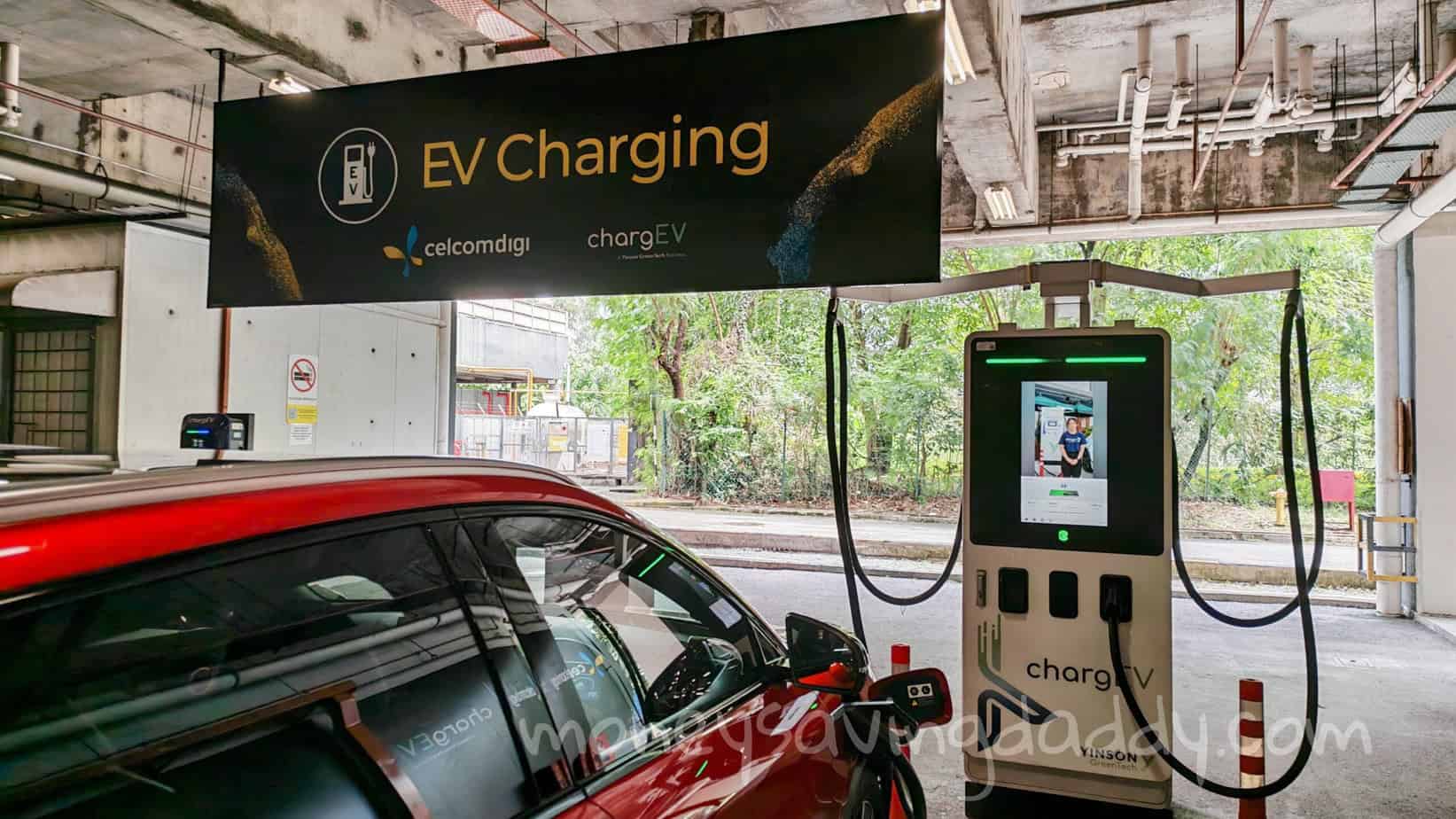
- Blended electricity: $0.70/kWh (all public charging at SP Group, Charge+, and Shell Recharge. No home charger)
- Charging losses: 10% (charger inefficiency, vampire drain when parked)
Step 1: Base consumption
- 16,000 km divided by 100 times 17 = 2,720 kWh used by the car
Step 2: Add 10% losses
- 2,720 times 1.10 = 2,992 kWh pulled from the wall
Step 3: Annual electricity bill
- 2,992 times $0.70 = $2,094 per year
Cost per km: $0.131 (about 13 cents).
Compare to a petrol SUV: the Honda Vezel 1.5L (Cat A COE)
The Vezel is the most apples-to-apples petrol comparison: same compact SUV segment, same Cat A COE, popular with SG families.
| Item | BYD Atto 3 (EV) | Honda Vezel 1.5L (Petrol) |
|---|---|---|
| Fuel/electricity (16,000 km) | $2,094 | $2,800 (1,000 L at $2.80/L) |
| Typical fuel efficiency | 17 kWh/100km | ~16 km/L (6.25 L/100km) |
| Annual maintenance (oil changes every 8,000 km, spark plugs, filters) | $0 (no engine, no oil) | ~$650 ($120 oil change x 2, plus spark plugs and misc servicing) |
| Tyre replacement at 26,000 km | $438 | ~$440 (4 tyres, similar UHP tier) |
| Insurance | $1,300 | ~$1,100 |
| 12V battery | $125 | $120 |
| Warranty repairs (BSD sensor, wiper hose, tailgate) | $0 (covered) | out of warranty, parts ~$500+ |
| Road tax (annual) | $1,500 | $682 (Cat A, $341 every 6 months) |
| Total running cost (year 1) | ~$5,457 | ~$5,512 |
Year 1 savings vs Vezel: ~$55. Yes, that is small. Here is why.
EV road tax in Singapore is roughly 2x a comparable petrol car road tax. The Vezel pays $682/year (the Cat A tier is $341 every 6 months). The Atto 3 is $1,500/year. That single line item wipes out most of the fuel saving.
The honest math:
- EV wins on fuel: save $706/year
- EV wins on first service: save $300/year
- EV wins on warranty: save $500+ if anything breaks in year 1
- EV wins on no engine oil, spark plugs, transmission fluid: save ~$300/year
- EV loses on road tax: lose $818/year (EV $1,500 vs Vezel $682)
- EV loses on insurance: lose $200/year
- Net: Vezel is $55 more expensive than EV in year 1. Basically a wash
This is the inconvenient truth most EV reviews skip. If you cross-shop a Vezel against the Atto 3, the year 1 running costs are nearly identical.
The savings show up over time because the Vezel keeps needing oil changes, spark plugs, filters, and transmission fluid. The EV does not. Over 5 years, the EV saves about $1,200.
5-year cumulative savings (assuming road tax and petrol price hold roughly stable): ~$1,200, driven by the maintenance gap, not the fuel gap. The Vezel needs oil changes, spark plugs, filters, and transmission fluid over 5 years. The EV does not. Not counting the EV-vs-petrol purchase gap, which the VES + EEAI rebates help close.
The financial case for EV gets much stronger if:
- You drive more than 16,000 km/year (every extra km on EV is cheaper)
- Petrol prices climb (every $0.10/L adds ~$100/year to Vezel cost)
- Your next car is the Vezel at higher COE (running cost math unchanged)
The honest sensitivity table
Your app might show 14 kWh/100 km on a calm highway day. It might show 19 kWh/100 km in a traffic jam with the AC cranked.
Here is what your annual savings look like across the realistic range (16,000 km/year, $2.80/L petrol):
| Efficiency (kWh/100 km) | kWh per year (with 10% losses) | Annual electricity cost | Savings vs petrol at $2.80/L |
|---|---|---|---|
| 14 (best case) | 2,464 | $1,725 | $2,307 |
| 15 | 2,640 | $1,848 | $2,184 |
| 16 | 2,816 | $1,971 | $2,061 |
| 17 (your number) | 2,992 | $2,094 | $1,938 |
| 18 | 3,168 | $2,218 | $1,814 |
| 19 | 3,344 | $2,341 | $1,691 |
| 20 (worst case) | 3,520 | $2,464 | $1,568 |
Even at the worst case (20 kWh/100 km), EV still saves over $1,500 a year vs a petrol SUV at $2.80/L. The savings are robust.
Charging reality (we charge at public carparks)
We charge at public carparks. Blended rate $0.70/kWh covers everything we have paid over the year.
- Public SP Group: about $0.60 to $0.80/kWh
- Shell Recharge: the most expensive public option
- Charge+: also pricey, but we use it because it has more stations in malls we are already at
- Mall and condo carpark chargers: rates vary widely, most cluster around $0.60 to $0.80/kWh
Charging habit: we plug in whenever the battery is at 20 to 40%. The rule is simple: at the end of a charge session, the battery should have at least 2 days of expected usage in it. That way we never have to panic if the next day throws a surprise (long drive, forgot to charge, traffic jam). Same logic as charging your phone overnight so you do not run out by lunchtime.
Honest verdict: public-only charging works in Singapore, but the per-kWh rate is higher than what home chargers pay. If you cannot charge at home, your running cost math will be at the higher end of my estimate. The case for EV is still environmental and convenience, plus a smaller financial saving than what home-charging owners report.
For those who rely on public charging, the SP Group EV charger network is the main option in Singapore. Public-only charging works, but it is not the same economics.
Maintenance and warranty reality
This is the section most readers will underestimate.
Scheduled service at 20,000 km: BYD scheduled us for the first service at 12 months / 20,000 km. The work was mostly checks. No oil change, no spark plugs, no transmission fluid. We waited 4 to 5 hours for it. At any petrol car mechanic workshop, the equivalent inspection would take 30 minutes or less.
Scheduling is easy, but the wait is the bottleneck.
The good news: free car wash is included, and that probably took the longest.
Warranty repairs (all $0):
- BSD (Blindspot Detection) sensor: faulty, replaced under warranty
- Wiper hose: faulty, replaced under warranty
- Electronic tailgate: faulty, repaired under warranty
Warranty covered all of it. The BYD warranty experience has been straightforward. We did not have to argue.
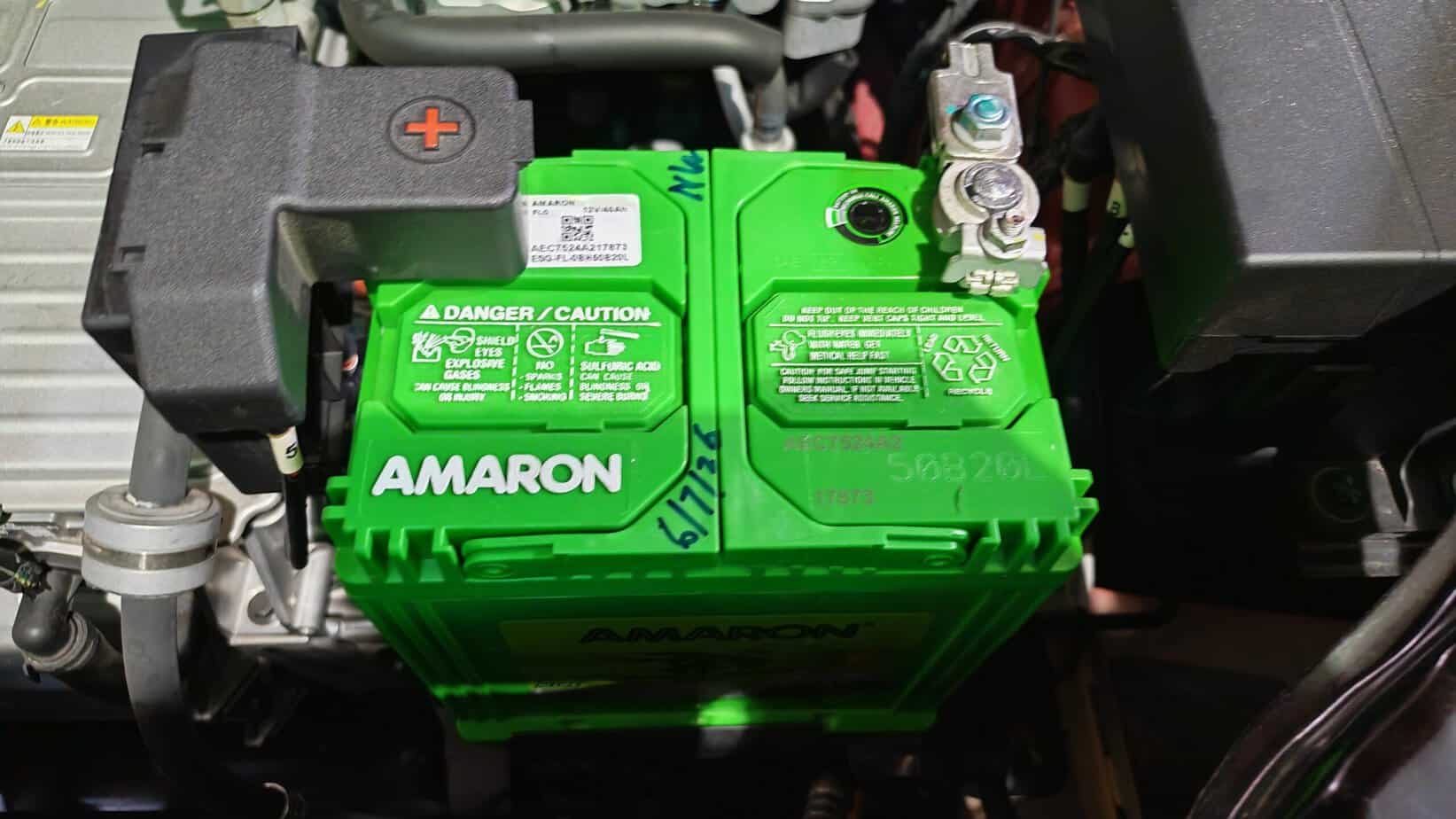
12V battery change: recommended every 2 years. EV still has a small 12V battery for accessories, even though the drivetrain does not use one. Cost was $125 for the part plus installation.
Tyres at 26,000 km: We did the full set. The Atto 3 came with factory tyres. We chose Giti P10 Control as the replacement.
Reasoning below.
What surprised us (the honest gripes)
Range drops in rain and on highway. Real-world range is 80 to 90% of the official number. Highway at 100+ km/h is where you feel it most.
Public charger queue on weekends. Saturday morning at popular malls. Plan B is essential.
Insurance is higher than petrol. Our renewal came in noticeably more than a comparable petrol SUV.
App login friction. SP Group, BlueSG, Shell, Charge+. Four apps, four logins.
Software updates are slow. BYD pushes OTA updates that fix real issues (fogging, AC timing) but slowly.
4 to 5 hour wait for simple service. This is the gripe nobody talks about. EV servicing is mostly checks, but the bay time is still scheduled like a major service.
Resale is the only open question. Year 1 resale data is thin.
I will revisit this in Part 3 EV resale value update when we have more signal.
On buying a 1-year resale unit (the move that saved us real money)
We did not buy new. We bought a 1-year resale BYD Atto 3 (2024 model, but the newer facelift with the larger rotating infotainment screen). This is the move that mattered most for our year 1 cost.
Why it worked:
- The steepest part of any new car depreciation curve is year 1. Buying at year 1 means someone else ate that 20 to 30% drop.
- The car still had full factory warranty remaining. BYD’s standard warranty is 6 years or 150,000 km on the car, 8 years or 160,000 km on the battery. We bought with roughly 5 years and 138,000 km of coverage left.
- The spec was current. The 2024 facelift is the same car BYD sells today. Larger screen, newer interior, same drivetrain.
- The COE we paid was for a category and tier that we would have bid for anyway.
When the math stops working for resale:
- Resale units are scarce in the popular trims. If you have to wait 3+ months for the right unit, that delay has a cost.
- Resale cars may have a shorter remaining warranty if you buy near the end of the warranty window.
- Some resale units have been lightly modified by the previous owner. Check.
For SG parents who want a family EV and are willing to skip the “new car smell” for a year, 1-year resale is the move I would make again.
PS: When we view the Atto 3, it has the new car smell. We are actually sold on the viewing day. Place deposit on the same day too.
Tyre replacement at 26,000 km
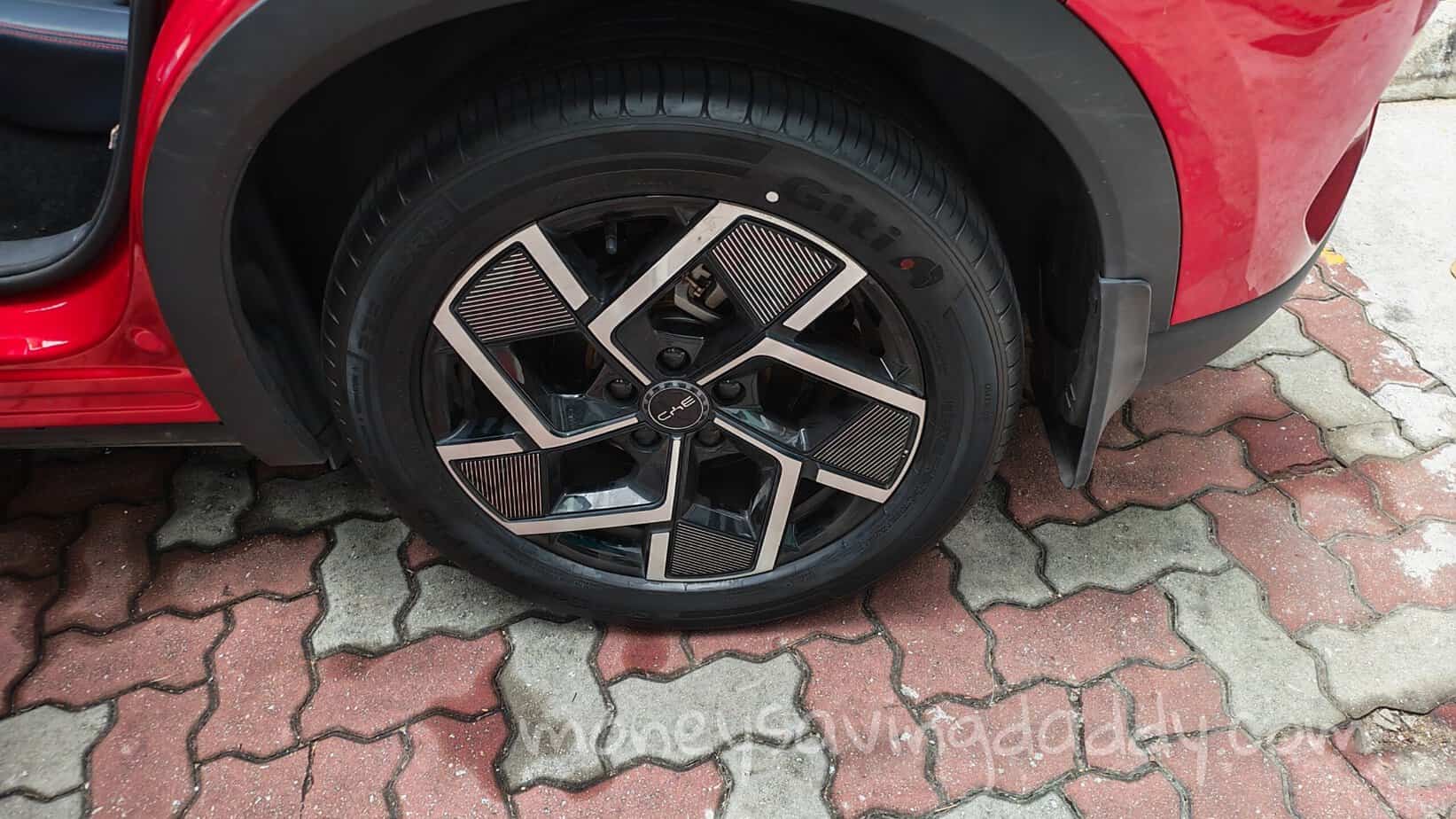
The Atto 3 came with factory tyres. We did the full set at 26,000 km.
Choice: Giti P10 Control
Reasoning:
- Same category as factory (UHP, comfort-oriented)
- ~$110 to $170 per tyre depending on size (17 to 20 inch), installed
- 5-year warranty on manufacturing defects
- Local availability through the Giti dealer network and sgcarmart workshops
Honest context on EV tyre wear:
- A petrol car tyre typically lasts 40,000 km before replacement
- EV tyres wear faster because of higher torque from the electric motor, and the extra weight of the battery pack
- Front tyres go faster than rear (more weight on the front axle from the motor)
- If you rotate tyres every 10,000 km, you can usually push to 30,000 to 35,000 km before needing new ones
- We forgot to rotate and still got to 26,000 km. With rotation, the EV should match a petrol car tyre life roughly.
- Not rotating means uneven wear, so the first pair to wear out (usually the front) dictates replacement timing
Specs that mattered to us:
- Ultra-high performance summer tire with focus on comfort and quiet ride
- Reduced drive-by-noise generation (a real win for an EV with no engine sound masking road noise)
- New groove pre-deformation design for better wet grip
- 3D groove design for sharper handling response
- Treadwear rating 380 to 420 (this is average for UHP, not a high-mileage tire)
Total cost for 4: $438, including installation and balancing, on the standard 18 inch size for the Atto 3.
The full Giti P10 Control product page and sgcarmart workshop pricing for reference.
Honest take: a budget-to-mid UHP tire that does the job. Not a performance tire, not a long-mileage tire.
What worked (the wins)
No more petrol station visits. Not once in 12 months.
Charging while the kids sleep or shop. This is the underrated one. The car AC idles at about 1% battery per hour. That is 0.6 kWh. At $0.70/kWh, that is 40 to 50 cents per hour of cabin cooling.
Cheap.
Much cheaper than buying a coffee and sitting at a cafe while waiting.
Example: family trip to the mall. Wife goes shopping, kids nap in the car with AC running. I sit in the car, scroll phone, listen to music.
After one hour: cabin is cool, kids are rested, battery dropped 1%.
Total cost: less than $0.50. You have a Happy Wife, and well rested Kids.
You cannot do this with a petrol car without:
- Leaving the engine running (wastes fuel, fumes)
- Turning the engine on and off every few minutes (annoying)
- Driving around the carpark to keep AC going (defeats the purpose)
Quiet ride. Kids nap better in the back.
Pre-cooling via app. Start the AC 10 minutes before you leave. The cabin is cool when you strap the kids in.
Warranty covered everything that broke. The BSD sensor, wiper hose, and tailgate repair would have been $X at a petrol workshop.
All $0.
Long-distance reality: the Genting trip
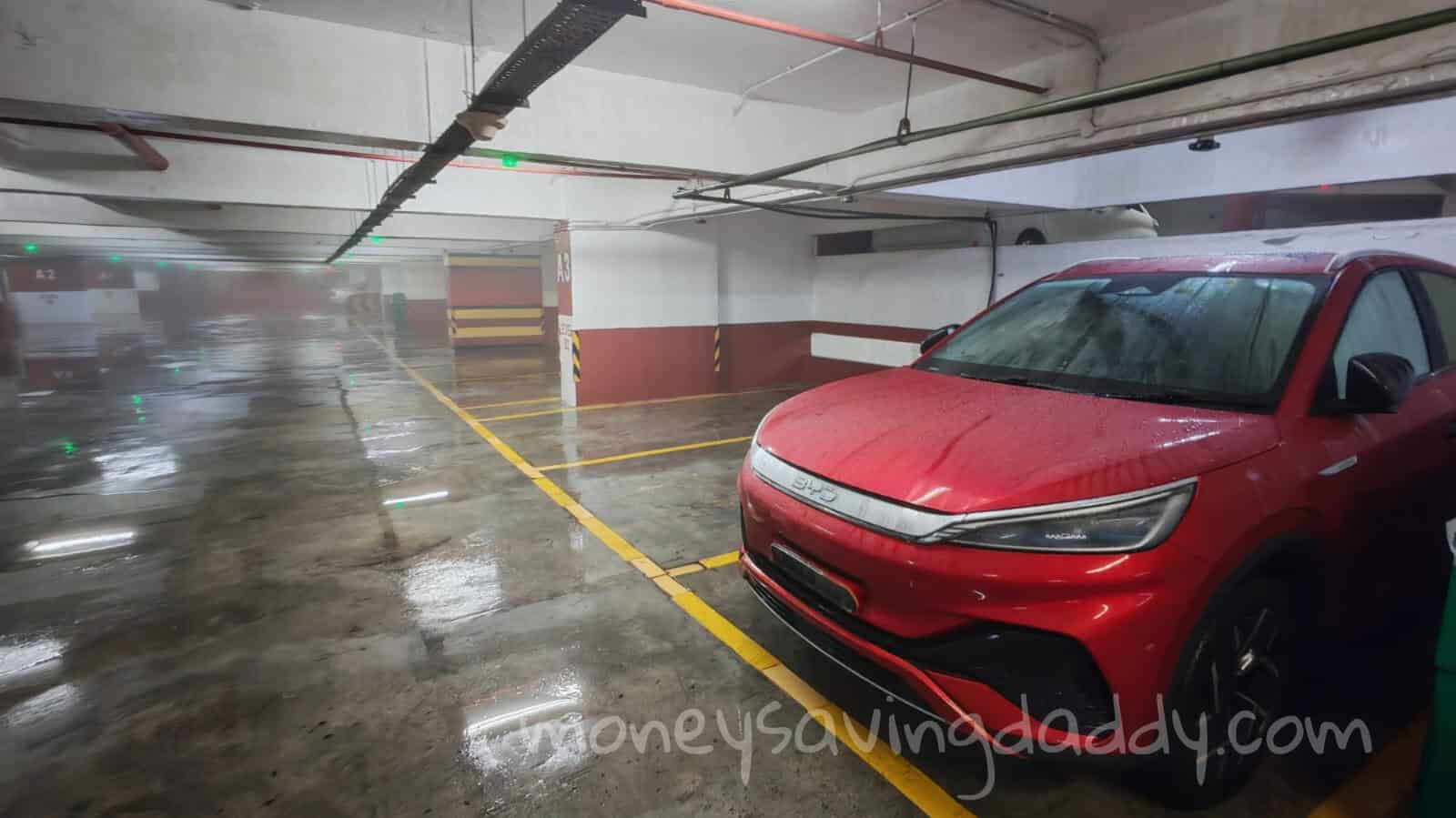
We did a trip to Genting in the Atto 3. Honest notes:
- Highway at 100+ km/h eats range fast
- One leg: Seremban to Ayer Hitam R&R, covered 180 km on about 90% battery. Arrived with 10% left. Tight but doable.
- Public DC chargers at R&R (Ayer Hitam, etc.) are functional but expensive
- Total trip cost in charging was higher than petrol would have been on the same route
Verdict for long-distance: EV is fine for short highway stretches. For multi-hour drives, it is workable but requires planning. For daily SG driving, EV is hands-down the better choice.
For the full Genting trip logistics, charging stops, and route planning, see my Singapore to Genting EV road trip guide.
If you are cross-shopping the Vezel and the Atto 3, my earlier 8-months comparison post is the natural read next. Numbers are slightly different (I had less data then), but the shape of the math is the same.
Should YOU go EV in Singapore? (decision guide)
EV is right for you if:
- You have reliable access to a charger (home with EV charger, landed private, or a public carpark charger within easy reach of where you park overnight)
- You drive 10,000+ km/year (savings scale with mileage)
- You mostly do short trips within Singapore
- You can take delivery before end of 2026 to lock in better rebates
EV is not right for you if:
- You have no reliable access to a public charger nearby
- You mostly do multi-hour highway drives (Malaysia, Thailand road trips)
- Your annual mileage is below 8,000 km
- You buy cars on a 3-year cycle (resale still uncertain)
My verdict
I would do it again. Same car, same setup, same family.
The savings are real.
The convenience of cabin cooling while the kids nap is the win I did not see coming. The gripes are real too: insurance is higher, public charger apps are fragmented, the 4 to 5 hour service wait is annoying, long-distance requires planning.
The one open question is resale. I will revisit it at year 3.
Ask me again at year 3.
If you are still deciding whether to go EV at all, my early piece on the same decision is the companion read: Should I Switch To An EV Car In Singapore. The numbers have shifted since then, but the trade-offs are the same.
FAQ
Q: How much does the BYD Atto 3 cost in Singapore?
A: Price moves with the COE. For current pricing, check BYD Singapore or sgcarmart. After VES + EEAI rebates (2025 was up to $30,000, 2026 is up to $20,000), the net OTR swings mostly on the COE at delivery.
Q: Is EV insurance really more expensive?
A: Yes, 10 to 20% higher than a comparable petrol SUV.
Q: How long does BYD service take?
A: Easy to schedule. The work is mostly checks (no oil change, no transmission fluid, no spark plugs). But the wait at the service centre ran 4 to 5 hours for us. Bring a book.
Q: How long do EV tyres last?
A: At 16,000 km/year, expect a full set around 25,000 to 30,000 km depending on driving style and tyre choice.
Q: Should I wait until 2027 to buy?
A: Wait only if you want lower prices AND are willing to lose the 2026 $20,000 rebate AND can stomach a 2027+ rebate of $0 to $15,000. Net math is not obvious.
Related MSD EV posts: